Glass vs. Stone vs. Ceramic Mosaic Tile: Which Is Best?
Choosing between glass vs. stone vs. ceramic mosaic tile is one of the most important decisions in a remodeling project. Each material creates a different visual effect and may have different requirements for installation, cleaning, sealing, and placement. The best option is not simply the most attractive sample—it is the material that fits the room, the application, and the way the surface will be maintained.
This comparison gives homeowners and interior designers a practical framework for evaluating mosaic materials for kitchen backsplashes, bathroom walls, showers, pools, niches, and decorative feature areas. Always confirm the specifications of the individual product before selecting it for a wet, submerged, floor, exterior, or high-heat application.
Glass vs. Stone vs. Ceramic Mosaic Tile at a Glance
Glass mosaic is known for reflected light, color depth, and a polished contemporary appearance. Stone and marble mosaics provide natural variation, veining, and an organic character. Ceramic and porcelain mosaics offer broad flexibility in shape, color, finish, and design style.
These are general characteristics rather than universal rules. A matte glass tile can feel restrained, a geometric marble pattern can look contemporary, and a handcrafted ceramic mosaic can become the strongest feature in a room. Compare the actual product, not only the material category.
Glass Mosaic Tile
Design Characteristics
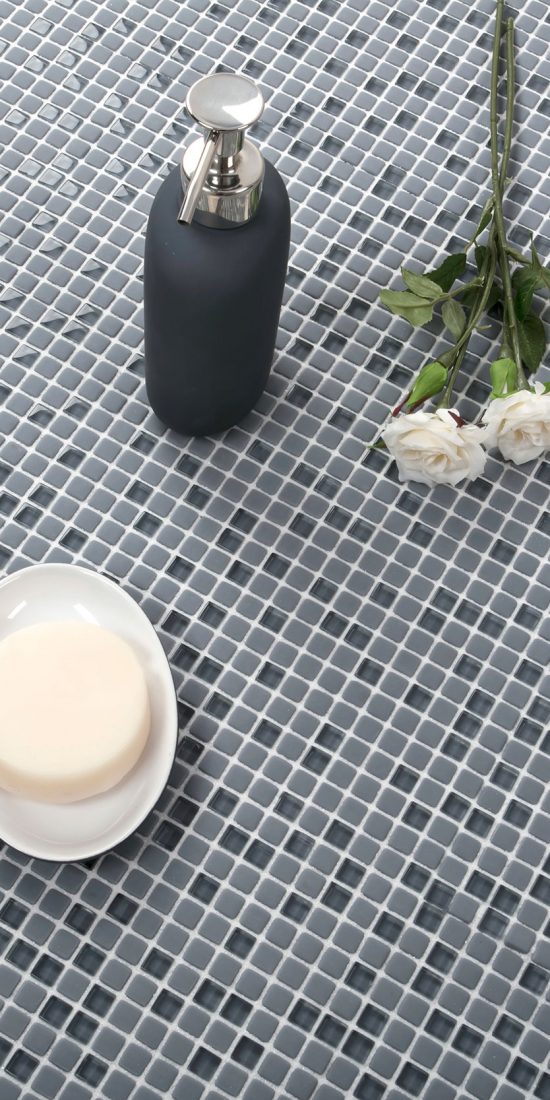
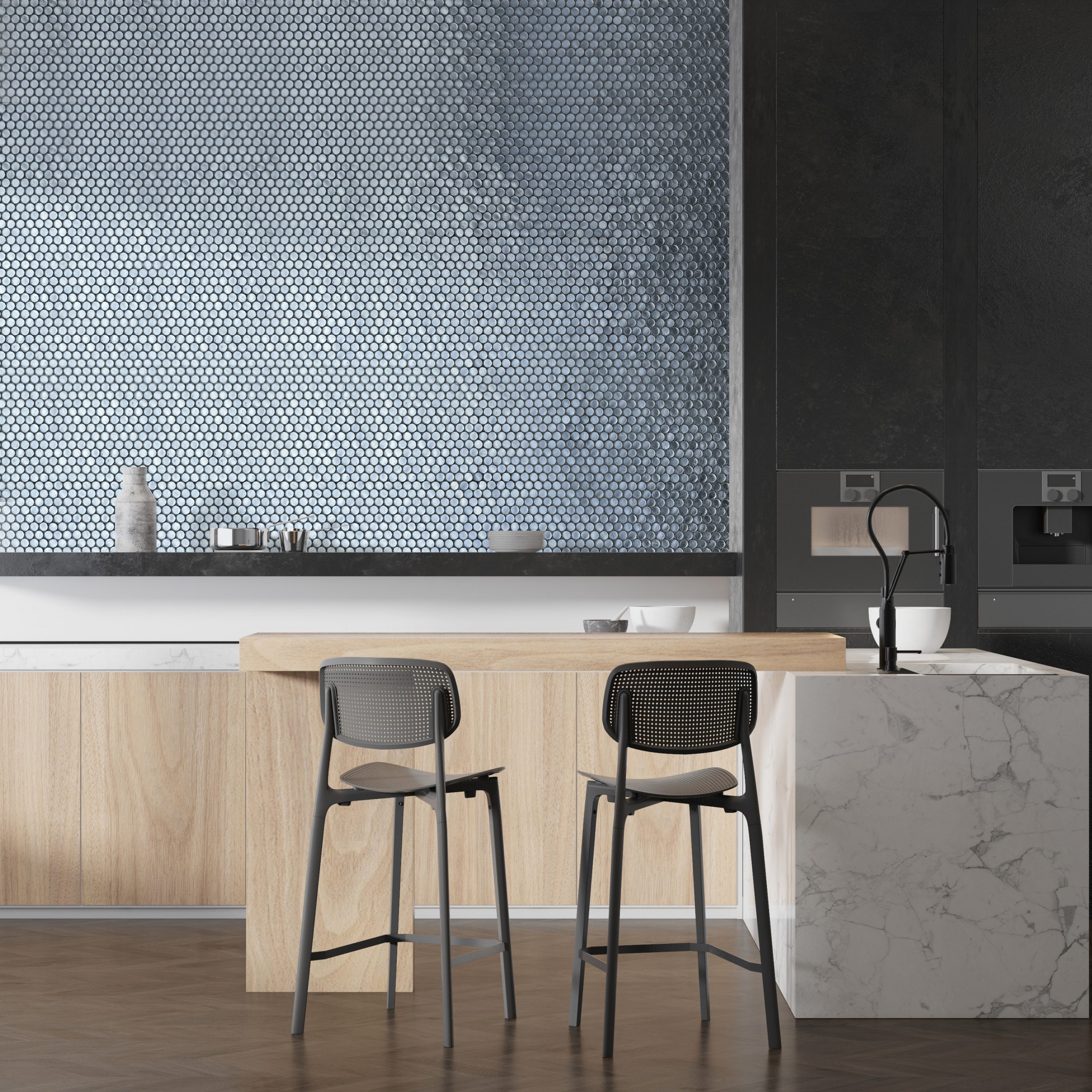
Glass can reflect and transmit light, helping a wall feel brighter and more dimensional. Depending on the product, the finish may be clear, frosted, glossy, iridescent, textured, or fully opaque. This range makes glass suitable for subtle neutral designs as well as saturated color statements.
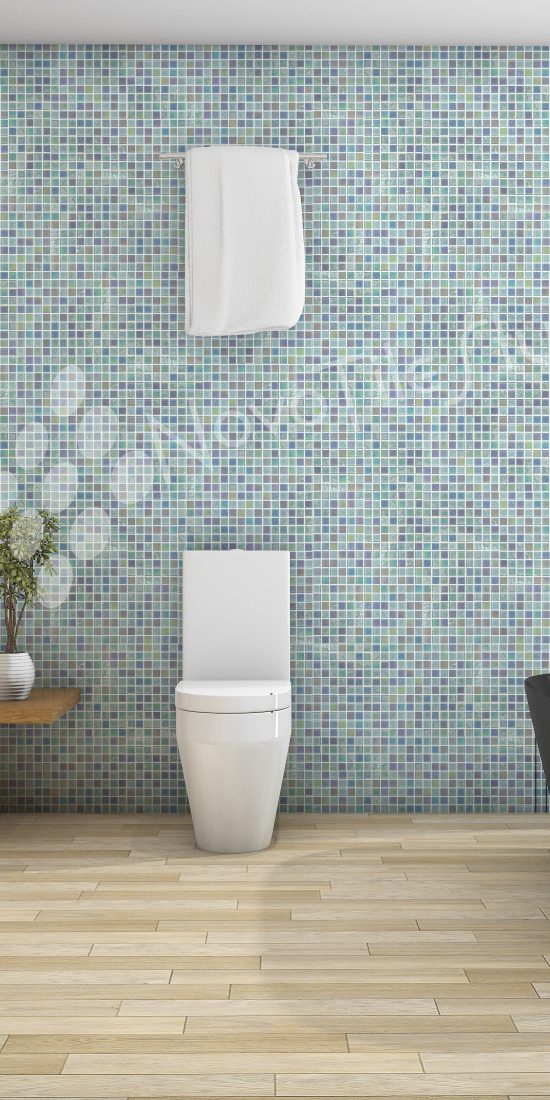
Glass mosaics work especially well when the design goal is luminosity, clean color, or visual movement. They can create an effective kitchen backsplash, shower-wall accent, bathroom niche, pool feature, or decorative wall when the specific product is approved for that application.
Installation and Maintenance Considerations
Translucent glass may reveal the adhesive or substrate behind the tile, so setting-material color and installation technique matter. Cutting and edge finishing may also require tools and methods appropriate for glass. Follow the tile and setting-material manufacturers’ instructions.
Many smooth glass surfaces are easy to wipe, but hard-water deposits and fingerprints can be more visible on reflective finishes. Textured glass may need additional cleaning attention. Explore the NovoTileStudio glass mosaic tile collection.
Stone and Marble Mosaic Tile
Design Characteristics
Natural stone and marble introduce veining, mineral variation, texture, and tonal differences that make every installation feel individual. They coordinate naturally with wood, metal, concrete, and stone countertops and can support traditional, transitional, organic-modern, and spa-inspired interiors.
The variation visible in a small sample may increase across several sheets. Review multiple pieces and plan the layout before installation so changes in shade and veining are distributed intentionally.
Installation and Maintenance Considerations
Some natural stones are porous or sensitive to acidic and abrasive cleaners. Depending on the product and application, sealing may be recommended before grouting, after installation, or periodically during the life of the surface. Grout color can also affect porous materials, so testing is important.
Stone suitability varies by location. Confirm whether the selected product is appropriate for showers, floors, submerged areas, exterior use, or exposure to cooking residue. Browse the stone and marble mosaic collection.
Ceramic and Porcelain Mosaic Tile
Design Characteristics
Ceramic and porcelain mosaics are available in a wide spectrum of shapes, colors, glazes, and surface effects. They can produce a quiet monochromatic wall, a familiar subway-inspired design, a handcrafted look, or a highly graphic geometric pattern.
These materials are often easy to coordinate with larger-format ceramic or porcelain tile, making them useful for shower niches, borders, vanity backsplashes, and accent walls within a larger bathroom or kitchen design.
Installation and Maintenance Considerations
Ceramic and porcelain are distinct material categories, and individual products can differ in water absorption, finish, edge treatment, thickness, and approved applications. Do not assume that every mosaic is suitable for floors, wet areas, pools, or exterior installations simply because it is labeled ceramic or porcelain.
Smooth glazed surfaces may support straightforward routine cleaning, while matte, textured, or handcrafted finishes can require different care. Review the product documentation and installer recommendations. See the ceramic and porcelain mosaic collection.
When a Mixed-Material Mosaic Makes Sense
A mixed mosaic can combine the reflected light of glass with the organic variation of stone, or connect several colors and finishes already present in a room. This can be useful when a designer wants one tile to relate to a countertop, cabinet color, plumbing finish, and wall palette.
The tradeoff is that each component may have different cutting, sealing, cleaning, or installation requirements. Confirm that the entire mixed product is suitable for the intended location. Explore the mixed-material mosaic collection.
Which Material Works Best for a Kitchen Backsplash?
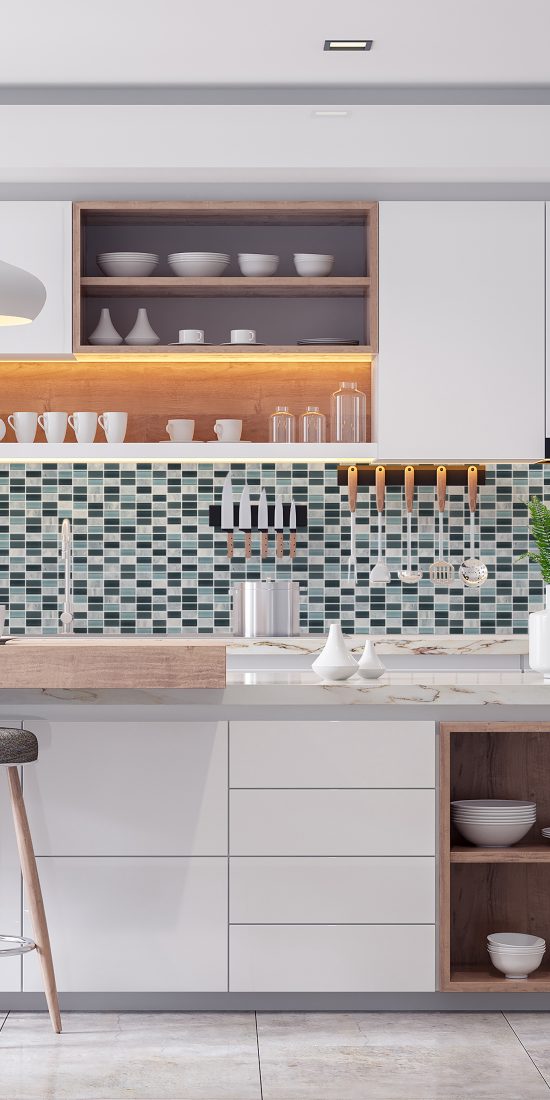
For a kitchen backsplash, compare stain visibility, texture, ease of wiping, and the relationship with cabinets and countertops. Glass can brighten the room and provide color depth. Stone or marble can echo a natural countertop or add warm variation. Ceramic and porcelain can offer a broad range of shapes and finishes.
The area behind a cooktop may have different heat, grease, and cleaning conditions than the wall behind a sink or beverage station. Confirm installation clearances, surface compatibility, and maintenance requirements. For a complete planning process, read our guide on how to choose mosaic tile for a kitchen backsplash.
Which Material Works Best for Bathroom Walls and Showers?
In a bathroom, start with the exact surface. A vanity backsplash, dry wall, shower wall, bathroom floor, and shower floor do not have identical requirements. Glass can add reflected light, stone can create an organic spa-like surface, and ceramic or porcelain can provide flexible color and pattern choices.
Product approval, waterproofing, grout, slip resistance for floors, and installer experience are more important than material category alone. Review our detailed guide to mosaic tiles for bathroom walls and showers.
Compare Color, Finish, Pattern, and Grout
Material is only one part of the decision. A tile’s color, finish, piece size, sheet pattern, edge detail, and grout color can change the result just as much. Small pieces and contrasting grout create a more graphic surface. Larger pieces and closely matched grout produce a calmer appearance.
View full sheets beside the permanent finishes in the room and under the actual lighting. Glossy materials may reflect nearby colors, and natural stone can look warmer or cooler as lighting changes. A physical sample provides information that a screen cannot fully reproduce.
Use This Material Selection Checklist
- Define the exact installation area and its exposure to water, heat, cleaning products, or foot traffic.
- Confirm that the individual product is approved for the intended application.
- Compare full sheets, not only single pieces or online images.
- Review color and finish beside cabinets, countertops, fixtures, and larger tile.
- Ask about cutting, substrate, adhesive, grout, sealing, and movement-joint requirements.
- Choose a maintenance routine appropriate for the material and finish.
- Use a qualified installer for wet areas, pools, floors, and technically demanding layouts.
- Order the quantity recommended for cuts, pattern alignment, variation, and future repairs.
Choose the Right Mosaic for Your Project
There is no single winner in the glass vs. stone vs. ceramic mosaic tile comparison. Glass is compelling when light and color depth matter. Stone and marble are strong choices for natural variation and timeless character. Ceramic and porcelain offer extensive design flexibility. The best decision comes from matching the product’s appearance and specifications to the exact project.
Shop all NovoTileStudio mosaic tiles or contact our team to explore materials, colors, and patterns for your kitchen, bathroom, pool, or feature-wall design.