Best Mosaic Tiles for Bathroom Walls and Showers
Mosaic tiles for bathroom walls and showers can turn a practical wet area into a carefully designed feature. Their smaller pieces make it possible to introduce pattern, texture, and color across shower walls, vanity backsplashes, niches, and decorative borders. The best choice, however, should balance appearance with water exposure, cleaning needs, installation requirements, and the specific surface where the tile will be used.
This guide explains how homeowners and interior designers can compare mosaic materials, formats, finishes, grout options, and maintenance considerations before choosing tile for a bathroom remodeling project.
Begin With the Exact Bathroom Application
Not every bathroom surface has the same performance requirements. A vanity backsplash receives occasional splashes, while a shower wall is exposed to water repeatedly. A shower floor also requires appropriate slip resistance, drainage planning, and a product specifically approved for that use.
Before selecting a mosaic, define whether it will be installed on a dry bathroom wall, tub surround, shower wall, shower niche, bathroom floor, or shower floor. Then confirm the manufacturer’s recommended applications and ask a qualified installer to review the substrate, waterproofing system, setting materials, and grout.
Compare Mosaic Materials for Bathroom Walls and Showers
Ceramic and Porcelain Mosaic Tile
Ceramic and porcelain mosaics are versatile choices for bathroom design. They are available in a wide range of colors, shapes, surface effects, and patterns, making them suitable for clean contemporary rooms as well as more traditional spaces. Many options are easy to coordinate with larger-format wall or floor tile.
Product specifications vary, so confirm whether the selected tile is recommended for the intended wet-area application. Explore our ceramic and porcelain mosaic collection for bathroom wall ideas.
Glass Mosaic Tile
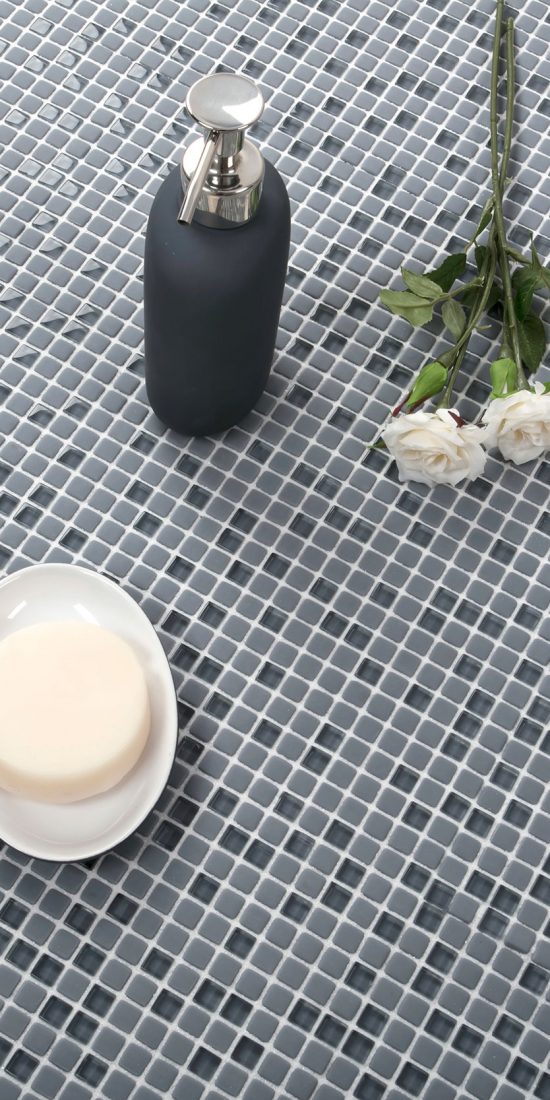
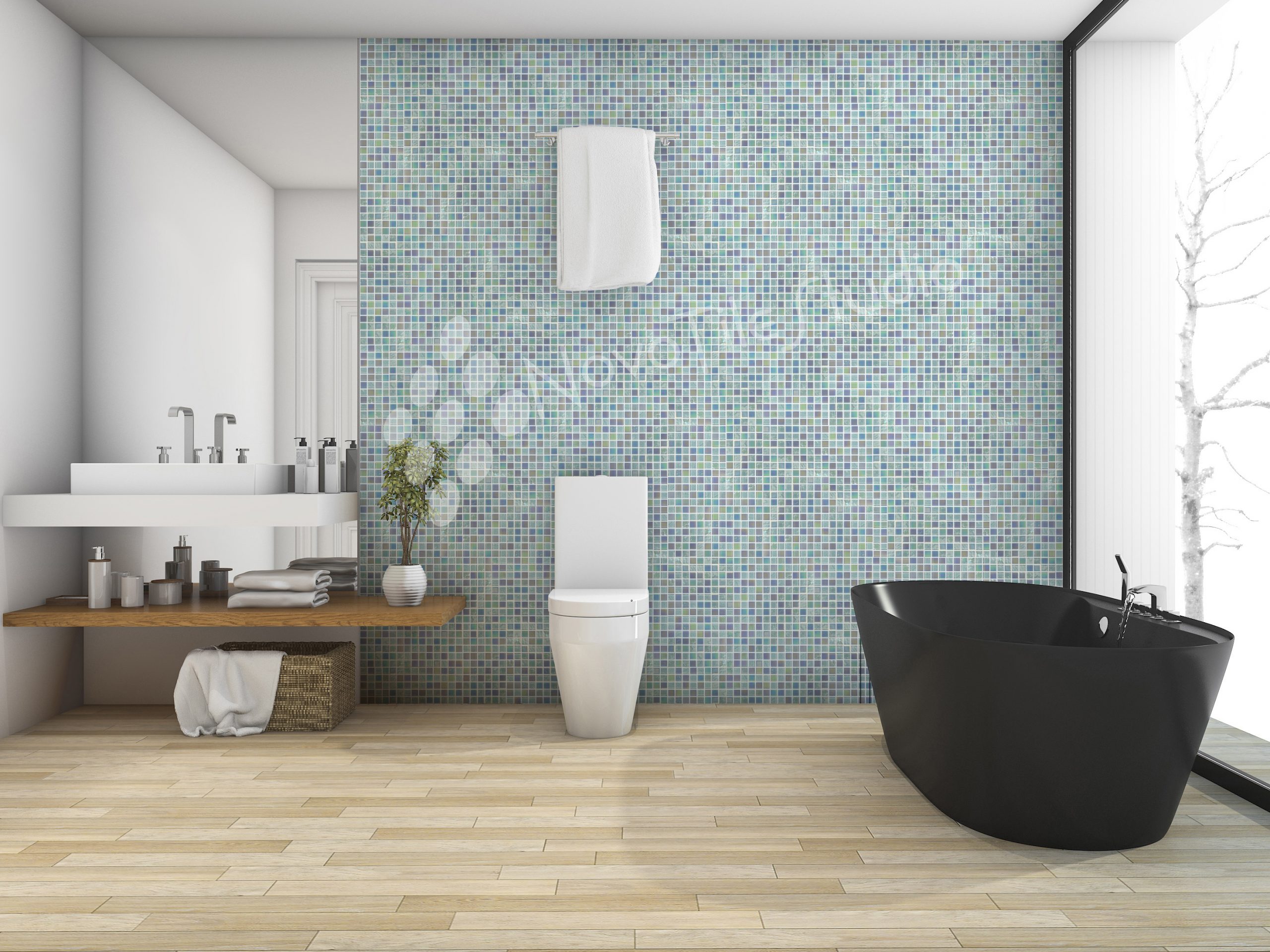
Glass mosaic tile reflects light and can help a small bathroom feel brighter. Clear, frosted, opaque, and iridescent finishes create different levels of depth and movement. Glass is especially effective on shower walls, niches, vanity backsplashes, and decorative accents where light can emphasize the surface.
Because translucent glass may reveal the setting material behind it, proper installation is important. Review the product instructions for suitable adhesives, grout, cutting methods, and acceptable locations. Browse our glass mosaic tile collection.
Stone and Marble Mosaic Tile
Natural stone and marble add veining, tonal variation, and an organic quality to a bathroom. They work particularly well in warm neutral palettes, spa-inspired rooms, and designs that coordinate with stone countertops. Natural materials can vary between sheets, which is part of their character but should be considered during layout.
Some stone products may require sealing and material-specific cleaning. Confirm suitability for showers and other wet areas before installation. See the stone and marble mosaic collection for design options.
Mixed-Material Mosaic Tile
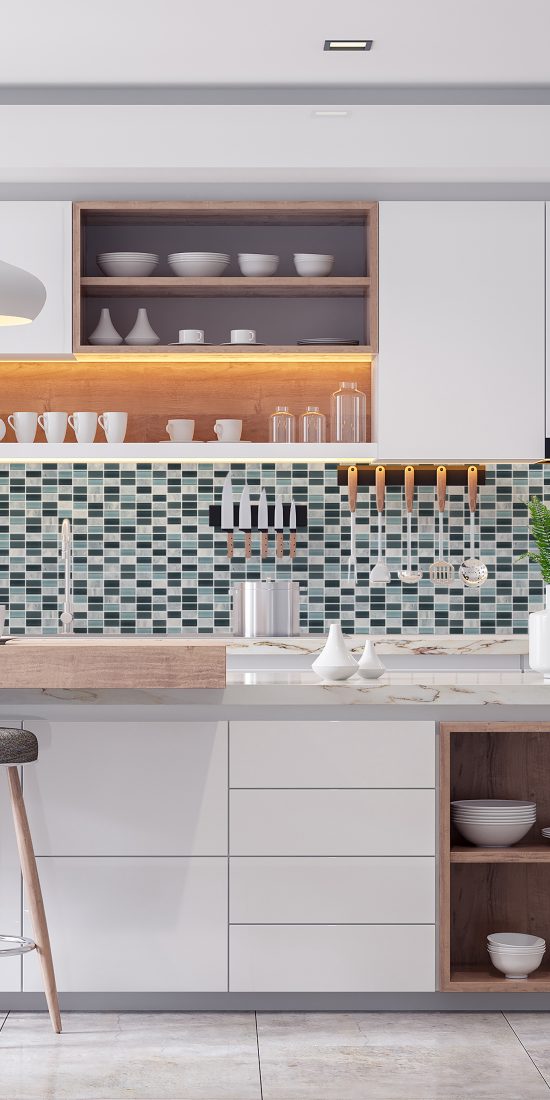
Mixed mosaics combine two or more surface effects within one sheet and can connect the finishes used throughout a bathroom. They are useful for feature walls and accents, but each component material may have different installation or maintenance needs. Always verify that the complete product—not only one of its materials—is approved for the planned location.
Explore our mixed-material mosaic collection for coordinated patterns.
Choose the Right Mosaic Size and Pattern
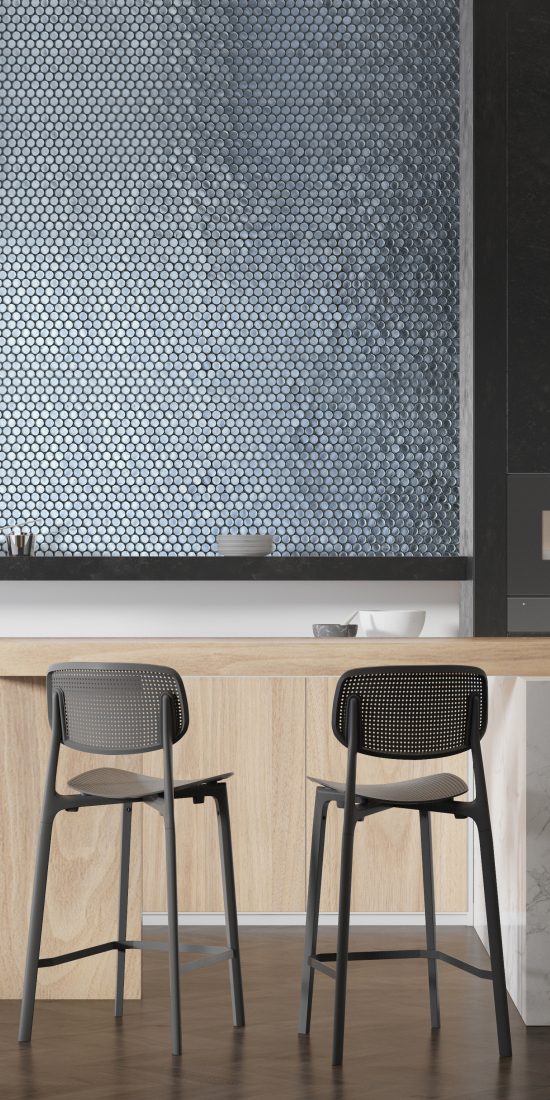
Small mosaic pieces follow curves and transitions more easily than large-format tile and create a detailed visual texture. They also introduce more grout joints. Larger pieces and simple grid patterns feel quieter, while hexagons, arabesques, elongated shapes, and multi-size designs produce more movement.
Consider the proportions of the surface. A complex pattern can become a strong focal point on a shower wall or niche, while a restrained repeat may work better across an entire bathroom. Review a full sheet—and ideally several sheets together—to understand the true pattern and variation.
Coordinate Color With Light and Permanent Fixtures
Bathroom lighting changes the way tile color and finish appear. Glossy glass can reflect daylight and vanity lighting, while honed or textured surfaces create a softer effect. Pale colors can make a compact room feel open; darker or saturated mosaics can provide contrast and depth.
Compare samples beside the vanity, countertop, plumbing finishes, wall paint, and larger tile. View them vertically under the actual bathroom lighting. A sample that looks neutral in a showroom may appear warmer, cooler, brighter, or more reflective in the finished room.
Plan Grout Color and Joint Appearance
Grout is a visible part of every mosaic installation. A color close to the tile creates a more continuous surface, while contrasting grout emphasizes each piece and makes the geometry more prominent. Since mosaics contain many joints, the grout choice can significantly change the overall design.
For wet areas, ask the installer to recommend a grout system appropriate for the product, joint width, maintenance expectations, and exposure conditions. Test the grout color with the mosaic before installation, particularly with porous natural stone or textured finishes.
Waterproofing Is Separate From the Tile Finish
Tile and grout are the visible finish, but a properly designed waterproofing system behind the installation is essential in showers and other wet areas. The tile itself does not replace the required substrate preparation, membranes, drainage details, movement joints, or professional installation practices.
Confirm that the installer will follow current building requirements, product instructions, and waterproofing-system recommendations. This planning is especially important around shower niches, benches, corners, valves, and transitions between materials.
Consider Cleaning and Long-Term Maintenance
A bathroom mosaic should fit the household’s maintenance routine. Smooth surfaces are generally easier to wipe, while deeply textured tile may require more attention. Natural stone and specialty finishes may need approved pH-neutral cleaners and periodic sealing, depending on the product.
Before purchasing, ask which cleaners should be avoided and whether the tile or grout requires ongoing treatment. Good ventilation, regular drying, and appropriate cleaning help preserve the appearance of the installation.
Bathroom Mosaic Selection Checklist
- Identify the exact surface: wall, shower wall, niche, bathroom floor, or shower floor.
- Confirm that the specific product is approved for the planned application.
- Compare ceramic, porcelain, glass, stone, marble, and mixed-material options.
- View complete sheets beside the permanent bathroom finishes.
- Check samples under the room’s actual lighting.
- Select grout color as part of the design.
- Review waterproofing, setting material, sealing, and cleaning requirements.
- Use a qualified professional for wet-area installation and local code compliance.
- Order the quantity recommended for cuts, layout adjustments, variation, and future repairs.
Find Mosaic Tile for Your Bathroom Project
The best mosaic tiles for bathroom walls and showers combine a design you enjoy with the right technical characteristics for the installation area. Define the application first, compare samples in the room, and verify every product and installation requirement before making the final selection.
Shop all NovoTileStudio mosaic tiles, read our guide to choosing kitchen backsplash mosaic tile, or contact our team for help exploring collections for your bathroom remodeling project.